
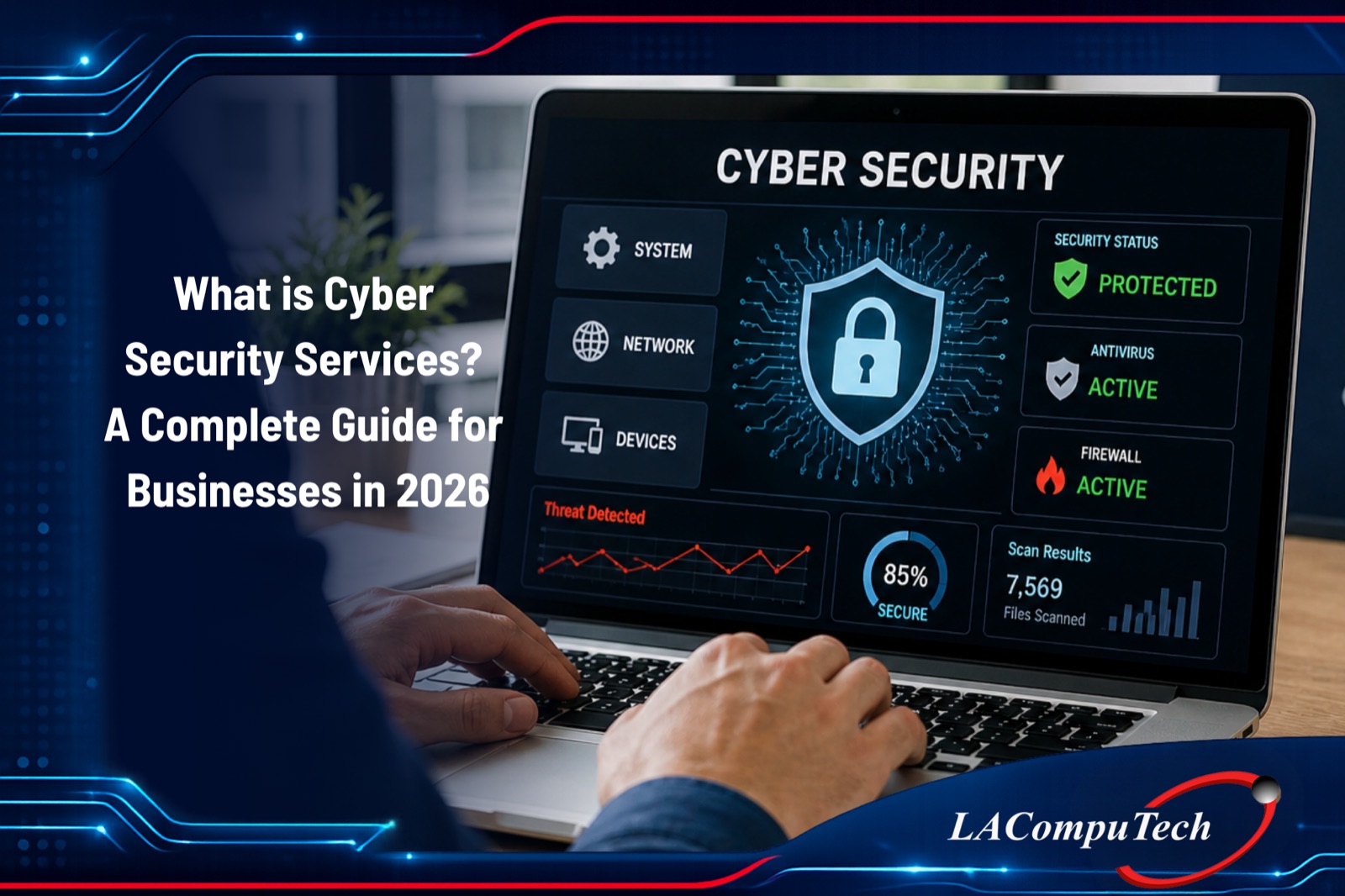
Cyber threats in 2026 are more advanced, more frequent, and more damaging than ever. Organizations face growing risk from ransomware, phishing, and AI-driven attacks. For decision-makers in healthcare, education, government, and regulated industries, the stakes are higher still, because of compliance requirements and sensitive data. This is where cybersecurity services come in: the protection, monitoring, and response capabilities a business needs to stay secure and operational.
What cybersecurity services are
Cybersecurity services are the technologies, processes, and practices that protect systems, networks, and data from threats. They help you prevent attacks, find vulnerabilities, and respond quickly when something happens. At their core, they aim to secure your IT infrastructure, protect sensitive data, support regulatory compliance, and minimize disruption.
Why they matter now
The threat landscape has shifted. Today’s businesses face ransomware that can halt operations, phishing aimed at employees, and AI-powered attacks that slip past older defenses. The IBM Cost of a Data Breach Report notes that the average cost of a breach keeps rising, which makes prevention a financial priority, not just a technical one.
The risks of getting it wrong include lost data, regulatory penalties, reputational damage, and downtime. A mid-sized healthcare provider hit by ransomware, for instance, can see patient services interrupted for days, with significant recovery costs. Early detection and response are exactly what managed cybersecurity is designed to provide.
The main types of cybersecurity services
- Network security. Firewalls and intrusion detection that keep unauthorized users out.
- Endpoint security. Protection for every connected device, laptops, phones, servers, since each is a potential entry point.
- Cloud security. Safeguards for data and access as you move to cloud platforms.
- Managed cybersecurity. 24/7 monitoring and protection handled by a provider instead of an internal team.
- Threat detection and response. Real-time monitoring that stops threats before they escalate, with an incident-response plan ready to go.
- Data protection and backup. Encryption, backups, and disaster recovery so data stays secure and recoverable.
What you get from it
Organizations that take security seriously tend to see fewer disruptions and steadier operations: lower risk of breaches, better business continuity, support for compliance, stronger customer trust, and more predictable IT spending over time.
How it works
Good cybersecurity follows a structured cycle: assess risk and scan for vulnerabilities, put the right tools and policies in place, monitor and update continuously, and respond and recover when an incident occurs. The NIST Cybersecurity Framework is a widely used reference for these practices.
How to choose a provider
When evaluating a provider, look at their experience and certifications, the range of services they offer, how well they can customize and scale, and whether they truly provide 24/7 support and monitoring. LAComputech focuses on tailored protection and rapid response for healthcare, education, government, and regulated businesses.
Signs your business needs help
Many organizations wait until it is too late. Watch for frequent system issues or suspicious activity, a lack of internal security expertise, handling of sensitive customer data, or rapid growth and digital change that outpaces your defenses.
Where things are heading
Cybersecurity keeps evolving. The clear trends are AI-assisted security tools, Zero Trust models, more emphasis on cloud security, and automation in threat detection. Organizations that adopt these will be better prepared for what comes next.
Secure your business with LAComputech
Threats are not slowing down, and neither should your defenses. We deliver managed cybersecurity, network security, and broader IT security tailored to your environment. If you are unsure where your security stands, reach out for a short, no-pressure assessment.